AS 4084:2023 — The Australian Steel Storage Racking Standard, Explained for Buyers
By Dan Sun, Marketing Director · Technically reviewed by Yongfeng Jiao, Structural Engineer · JISE Intelligent Storage
What AS 4084 covers
AS 4084 'Steel storage racking' is the reference standard for adjustable steel storage racking in Australia and New Zealand. The current edition is split into AS 4084.1:2023 (design) and AS 4084.2:2023 (operation and maintenance), superseding AS 4084-2012.
It is not a voluntary marketing badge. Australian work health and safety regulations, building consent processes and insurers all reference AS 4084 — racking that cannot demonstrate compliance can be refused installation approval, and becomes a serious liability position after any incident.
What changed in the 2023 edition
The 2023 revision updated design methods and testing requirements in line with international practice, and tightened operational obligations: racking must now be audited at least every 12 months by an external competent provider, with documented load signage, damage reporting and repair records.
For buyers, the practical consequence is this: your supplier's engineering documentation is no longer a one-time purchase artifact. It is the file your annual auditor will ask for, every year, for the life of the system.
How independent verification actually works
AS 4084 issues no certificates itself — compliance is demonstrated through engineering evidence. The rigorous route, and the one JISE holds, is a hybrid verification performed by an Australian chartered engineering firm: physical testing of individual components, then system-wide analytical validation by finite element method, with the component test results as model inputs. This combination satisfies the standard without requiring a full-scale physical test of every configuration.
JISE's verification was performed by Barrason's Group (structural and civil consultants, Pakenham VIC) under reference series 24111305, issued December 2024. The program had two halves: a documented testing methodology defining loads, combinations and acceptance limits for every component class; and analytical validation of global system behaviour against AS 4084-2023 ultimate and serviceability limit states.
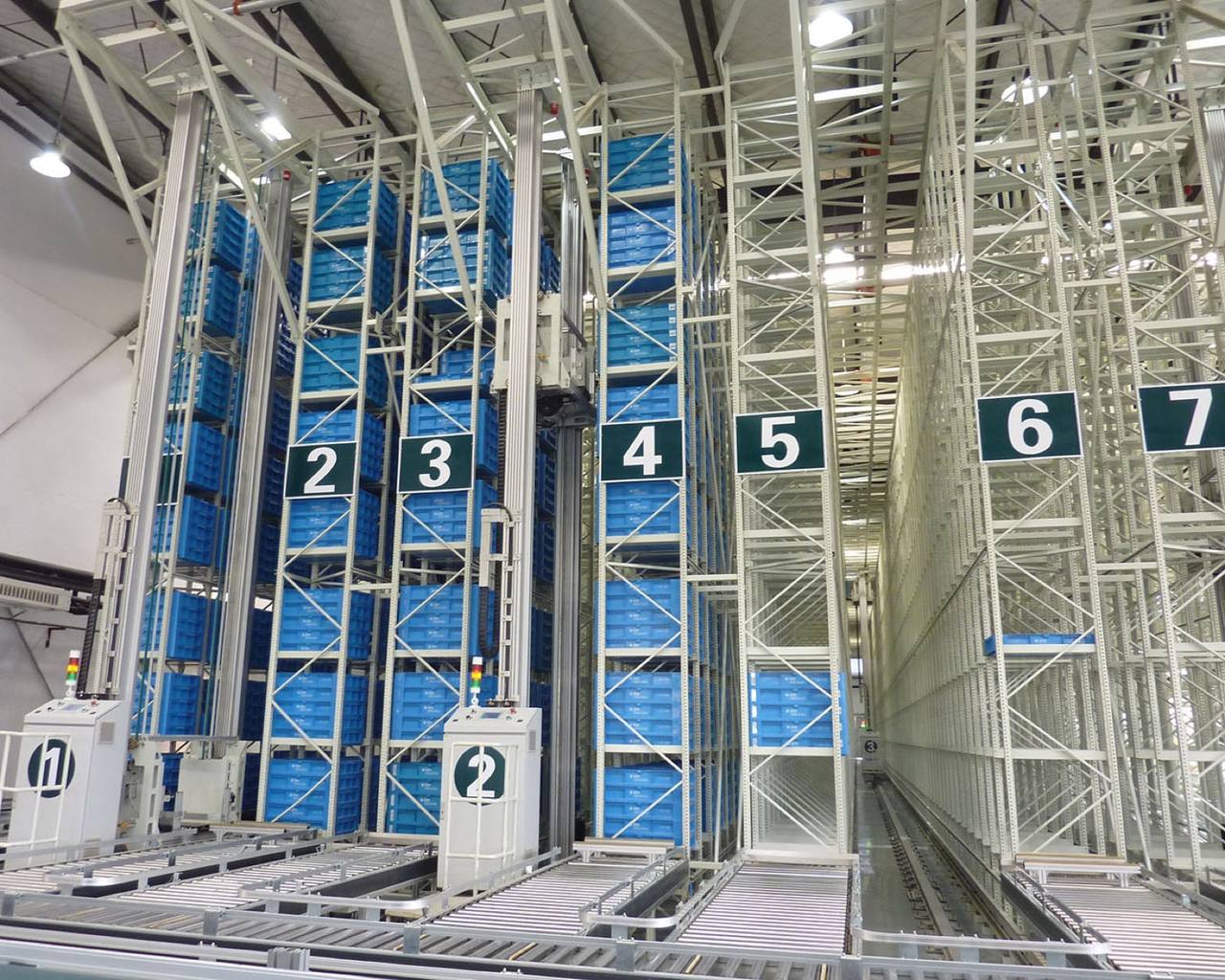
The component classes verified under this program — uprights, braces, beams, connectors, base plates — are the same hardware across JISE's export lines, from radio shuttle racking to AS/RS high-bay racking, so the evidence chain travels with the product.
Inside the 24111305 test program
The testing methodology specifies load combinations straight from the limit-state framework of the standard, and a physical test protocol for each component class. These are the actual values from the published report:
Every component class passed, and the results are published as a capacity table summarising design versus resistant moments and forces for each element — the same table format your auditor will read.
| Component | Test protocol (from report 24111305) | Acceptance |
|---|---|---|
| Columns (uprights) | Axial load applied incrementally to 24.403 kN, combined with moments from lateral loads | Compressive resistance 61.699 kN; combined utilization 0.66 |
| Braces | Tensile and compressive axial loads incrementally to 2.028 kN | Stress 24.7 MPa vs 235 MPa yield |
| Beams (main & cross) | Uniformly distributed loads at ULS and SLS levels (0.784 / 0.560 kN/m main; 0.270 / 0.193 kN/m cross) | Deflection within L/250 (6.35 mm limit); measured 3.08–4.90 mm |
| Beam-to-column connections | Moment and shear applied simultaneously — 0.346 kN·m with 0.813 kN — increased incrementally | Resistant moment 1.037 kN·m, all combinations |
| Base plates & anchors | 30.593 kN vertical with 1.086 kN horizontal applied simultaneously; deformation and pull-out monitored | Concrete bearing and anchor resistance confirmed |
| Global system | FEM analysis under dead + pallet + seismic (X and Y) combinations at ULS and SLS | Deflection, stability and load transfer within AS 4084-2023 limits |
The Certificate of Compliance — what it legally is
The end product of the program is a Certificate of Compliance (No. 24111305) covering AS/NZS 4084.1:2023, issued for the purposes of Building Act 1993 (Vic) Section 238(1)(a) and Building Regulations 2018 Regulation 126, certifying compliance with NCC 2022 Part B1 for building classifications 5, 6, 7b, 8 and 10. All seven assessed categories — beams, columns, braces, cross beams, connections, base plate/anchors, global deflection — are certified COMPLIANT.
The certificate is signed by a named, registered engineer: Andrew Barraclough, FIEAust, CPEng, NER, RPEQ 22822 — a chartered professional engineer whose registration is checkable on public registers. That signature is the difference between a certificate and a PDF: a registered engineer accepts professional liability for the assessment.
This class of certificate is what Australian building surveyors, insurers and end clients actually ask for. JISE publishes the complete set — capacity table, test procedure, CoC and PE certificate — for download:
Capacity table, Rev CTest procedure, Rev CCertificate of Compliance, Rev FPE certificate
Buyer's checklist for any supplier
Whether or not you buy from JISE, this is the evidence chain to demand for an Australian project:
- Component test reports for the exact upright, beam and connector configuration being quoted — not a similar one.
- A capacity table that states design versus resistant values per element, referencing the test evidence.
- A Certificate of Compliance signed by a chartered professional engineer (CPEng / RPEQ registration you can look up).
- Project-specific design documentation for your configuration, load signs, and the file your annual AS 4084.2 auditor will need.
- Evidence of completed compliant installations in Australia — JISE's include 140,000+ robot-compatible tote locations delivered for a global warehouse robotics company.
Buyer guide: Importing racking from China to Australia →Case: 140,000+ robot-compatible tote locations in Australia →
Frequently asked questions
How often must racking be inspected under AS 4084?
AS 4084 expects routine in-house checks plus a formal expert inspection at least every 12 months. Damage found between inspections should be assessed immediately — components classed as serious risk must be unloaded and taken out of service, not repaired in place.
What changed in AS 4084:2023?
The 2023 edition restructured the standard into Part 1 (design) and Part 2 (operation and maintenance), tightened design-verification requirements and put more weight on documented, test-backed capacity evidence. Buyers should specify the 2023 edition explicitly — many quotations still reference superseded editions.
How do I verify a supplier's AS 4084 claim?
Ask for the test report series number, the verifying engineer's credentials, and a Certificate of Compliance that names the supplier's actual components. JISE's independent 24111305 series — capacity tables, test procedures and Certificate of Compliance — is published on the Quality page for direct verification.
See it in practice: AS/RS high-bay racking engineered for AS 4084 markets →
More from the standards library.
Get a project quotation within 48 hours.
Send us your warehouse dimensions, pallet spec and target location count — our engineers reply with a layout proposal and budgetary price.