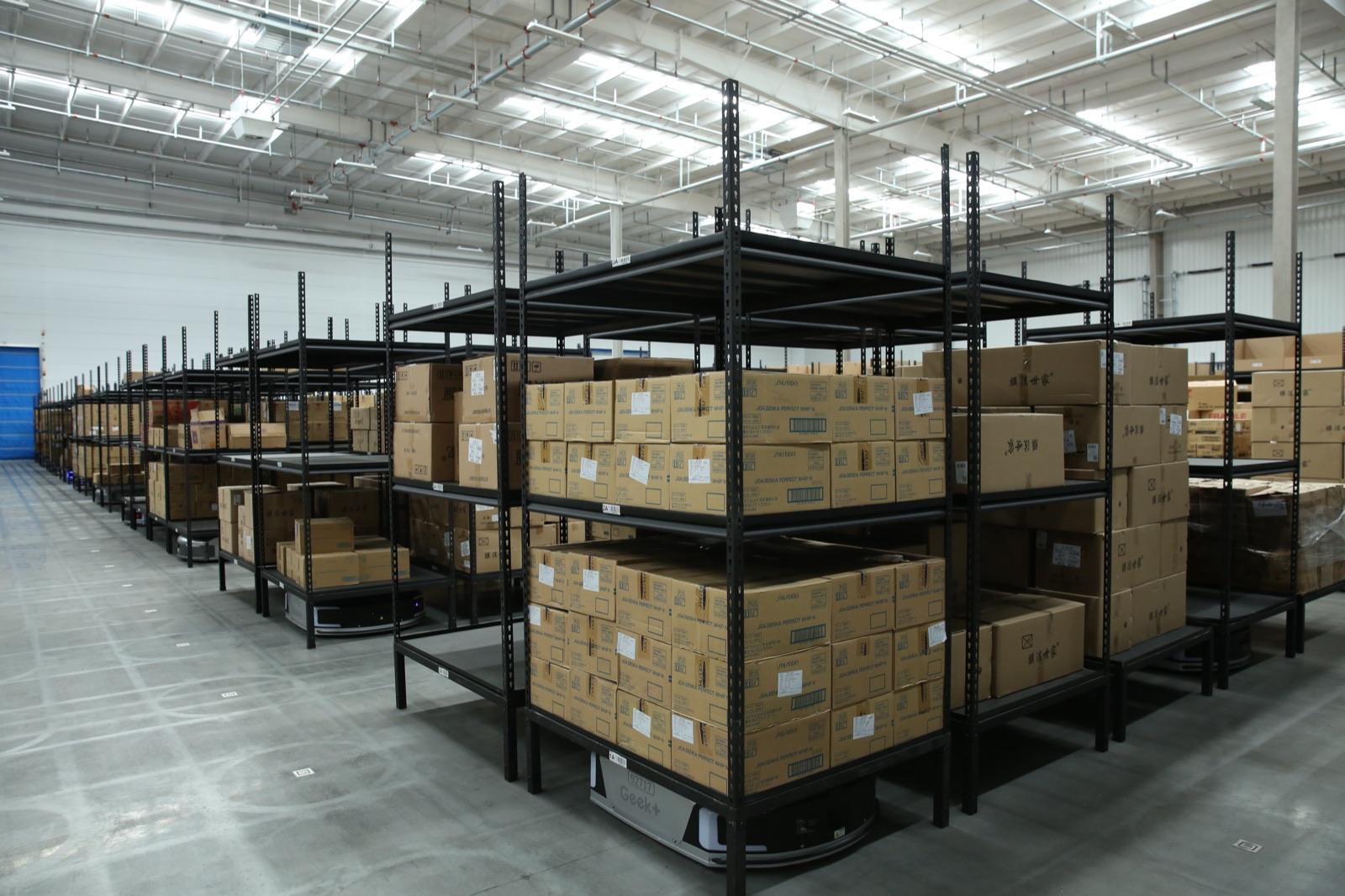
AGV / AMR Racking OEM
Robot-compatible racking manufactured to your interface drawings, with the batch consistency your fleet calibration depends on. 2 million+ tote locations delivered for the overseas projects of leading global AMR integrators — long-term racking supply relationships with multiple leading global robot brands.
What we manufacture.
The structural systems behind goods-to-person and robot-served storage.
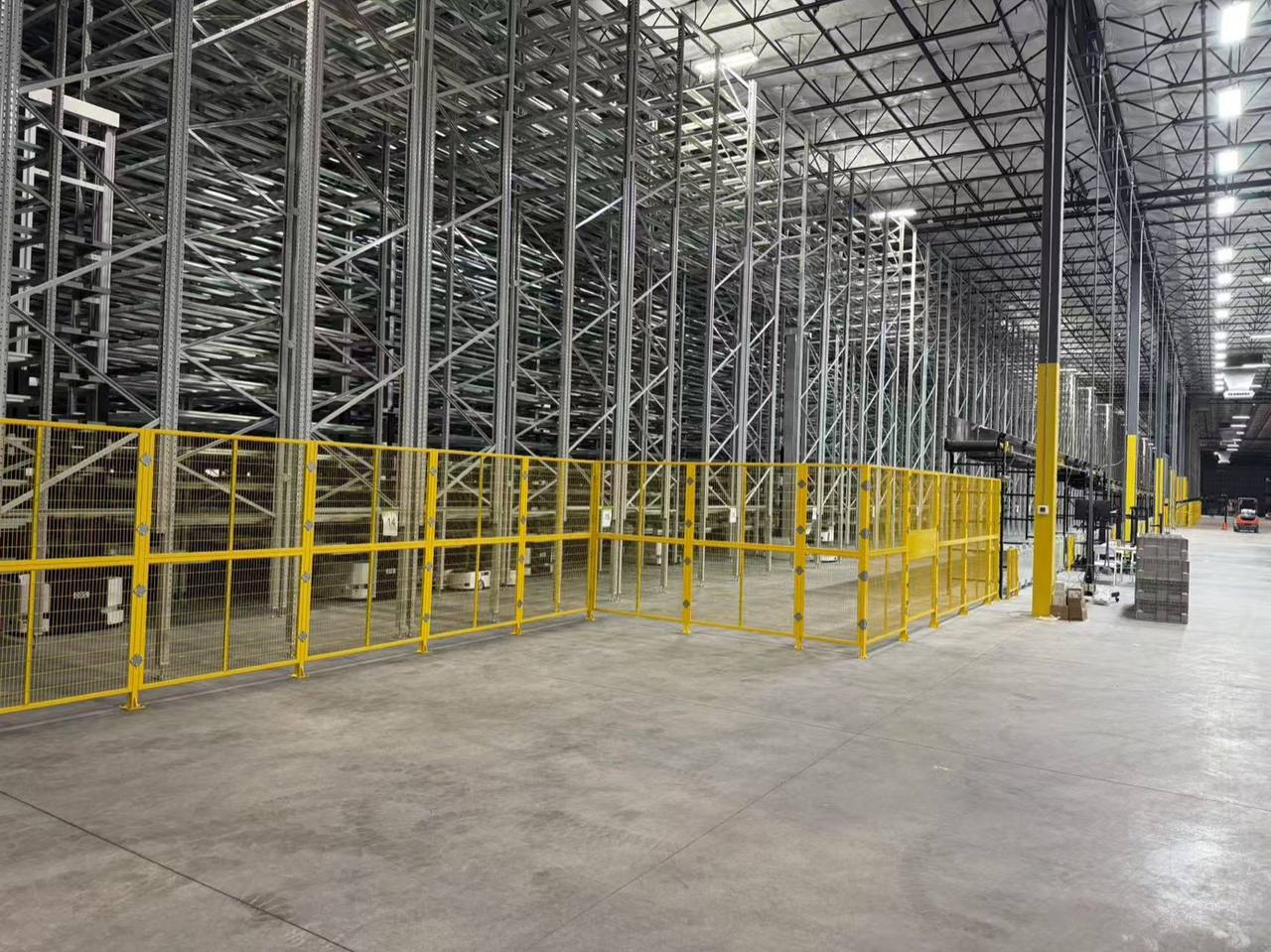
CTU / tote racking
Bin and carton racking for container-transfer robots — the highest-volume robot racking category, and our largest delivered base.
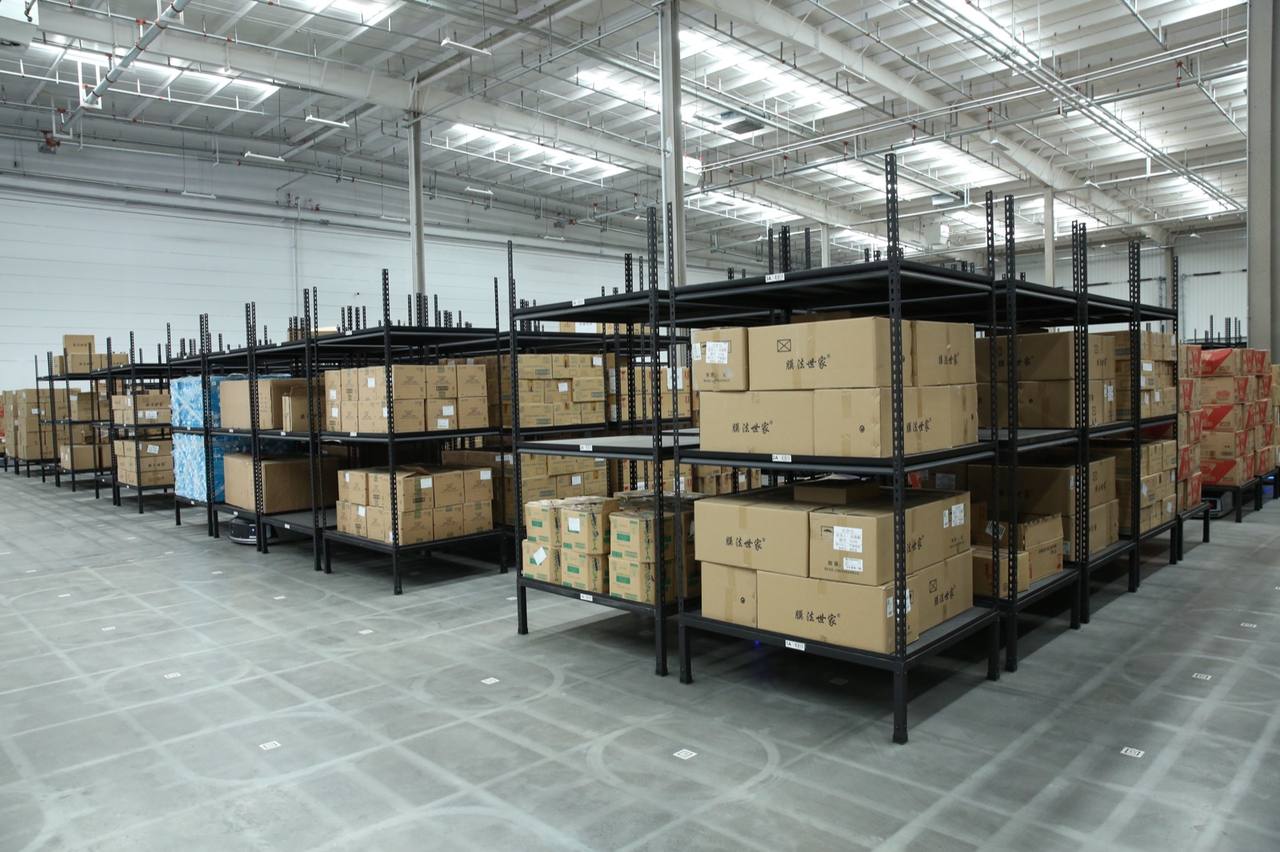
Pod & G2P shelving
Goods-to-person pod racks and mobile-compatible shelving units, manufactured to the robot OEM's geometry and payload spec.
G2P racking details →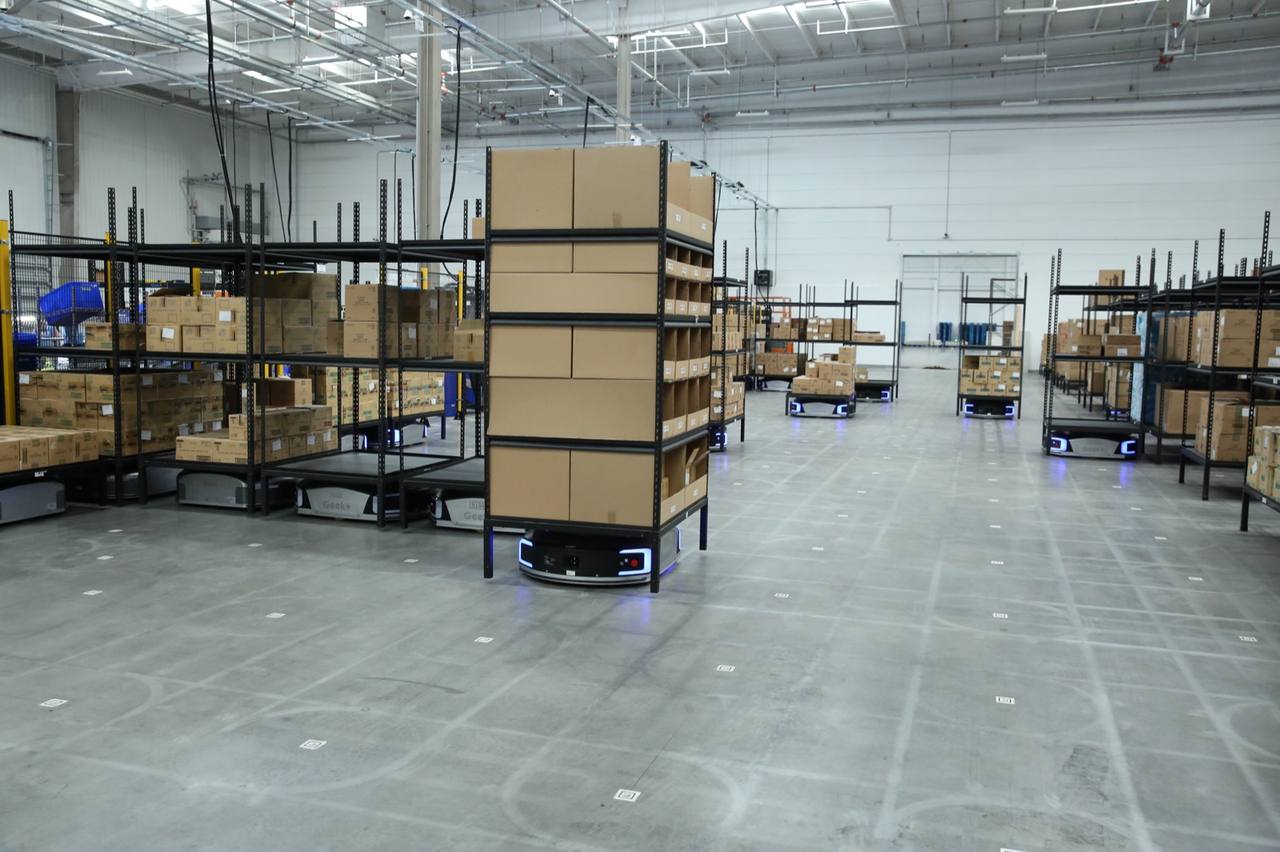
Robot-ready pallet racking
Pallet racking engineered for AGV/AMR pallet handling — tolerances, floor interfaces and protection detailed for driverless operation.
Robots are less forgiving than forklifts.
A driver compensates for a beam 5 mm off; a robot cannot. Robot racking is a distinct manufacturing discipline:
- Hole pitch — 50 / 75 mm patterns held to tight positional tolerance over full upright length
- Level & elevation repeatability — every pick face where the fleet map says it is
- Deflection control — verified per FEM 10.2.02 / EN 15512 so loaded beams keep pick geometry
- Batch consistency — components from month 1 and month 12 interchange without recalibration
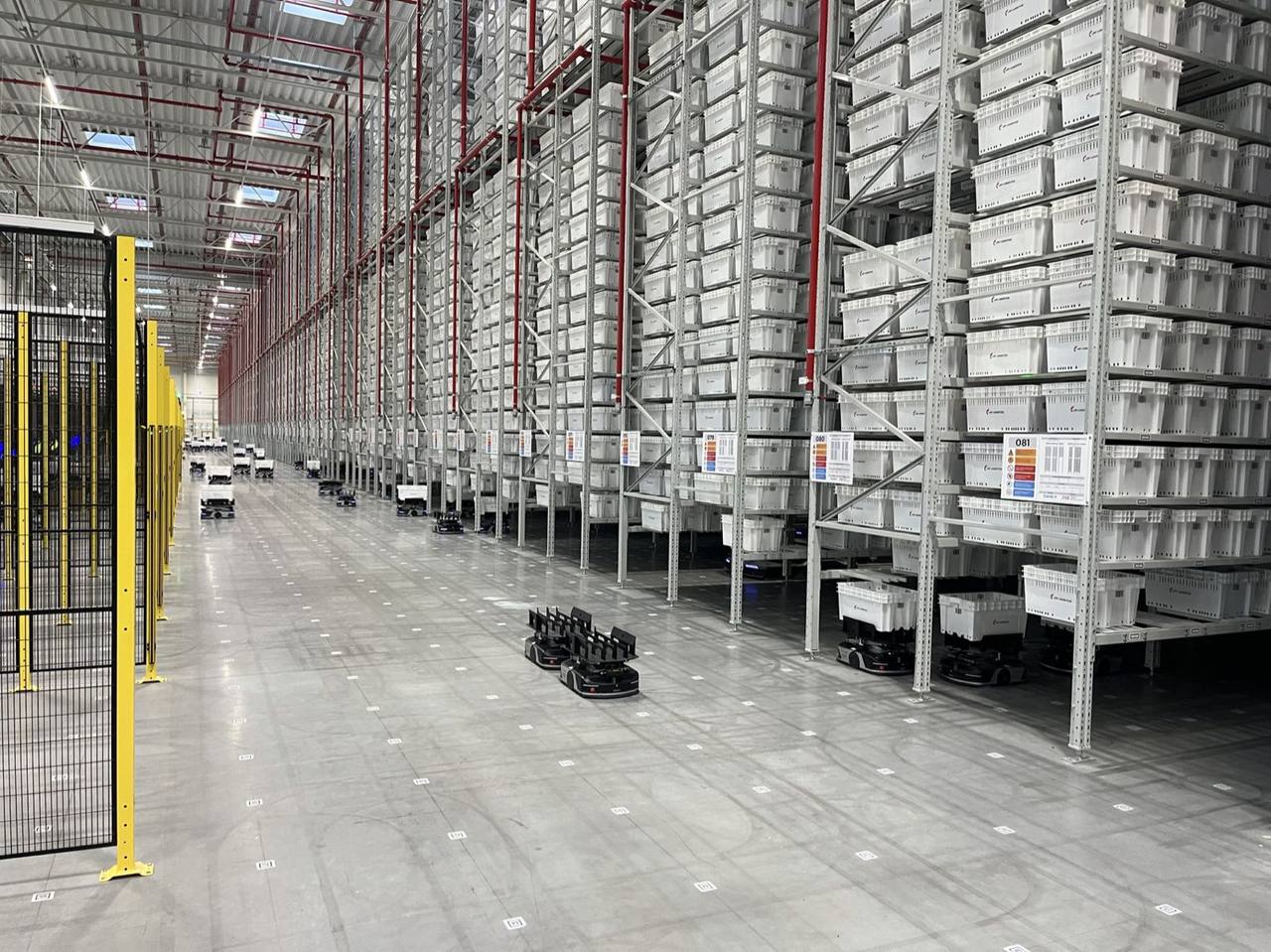
CTU, STU, pod — three robot racking forms, one manufacturing discipline.
Robot racking is not one product. The three dominant robot architectures load, stress and tolerance the steel in completely different ways — and the rack manufacturer has to engineer for the robot, not around it.
Tote racking for climbing robots (CTU)
Case/tote-handling robots travel up the rack itself. The rack is simultaneously storage structure and robot guideway: shelf edges become pick surfaces, uprights become climbing references. Verticality, shelf-level repeatability and edge condition decide whether the robot's gripper meets the tote or faults.
Tote racking for floor-running lift robots (RS/STU)
Robo-shuttle type AMRs run the aisle floor and telescope upward to tote level. The rack carries no robot, but its aisle-facing geometry — plumb, level heights, tote overhang clearance — must match the robot's reach envelope exactly, aisle after aisle, for the fleet's entire life.
Pod & mobile shelving for latent-lift AMRs
Compact shelving units lifted whole and carried to stations. Every gram of frame weight costs battery and payload; every millimetre of base-plate geometry decides whether the robot docks under the pod on the first try. Light-duty levels around 50 kg, infinitely reconfigurable on 50/75 mm pitch.
Deflection is a navigation problem, not just a strength problem.
In a manual warehouse, beam deflection is a serviceability issue: pallets sit slightly off level, and nobody measures it. In a robot warehouse, deflection moves the pick face. A loaded beam that sags 4 mm puts every tote on that beam 4 mm below where the fleet map says it is — and a robot gripper or fork has no driver's judgement to absorb the difference.
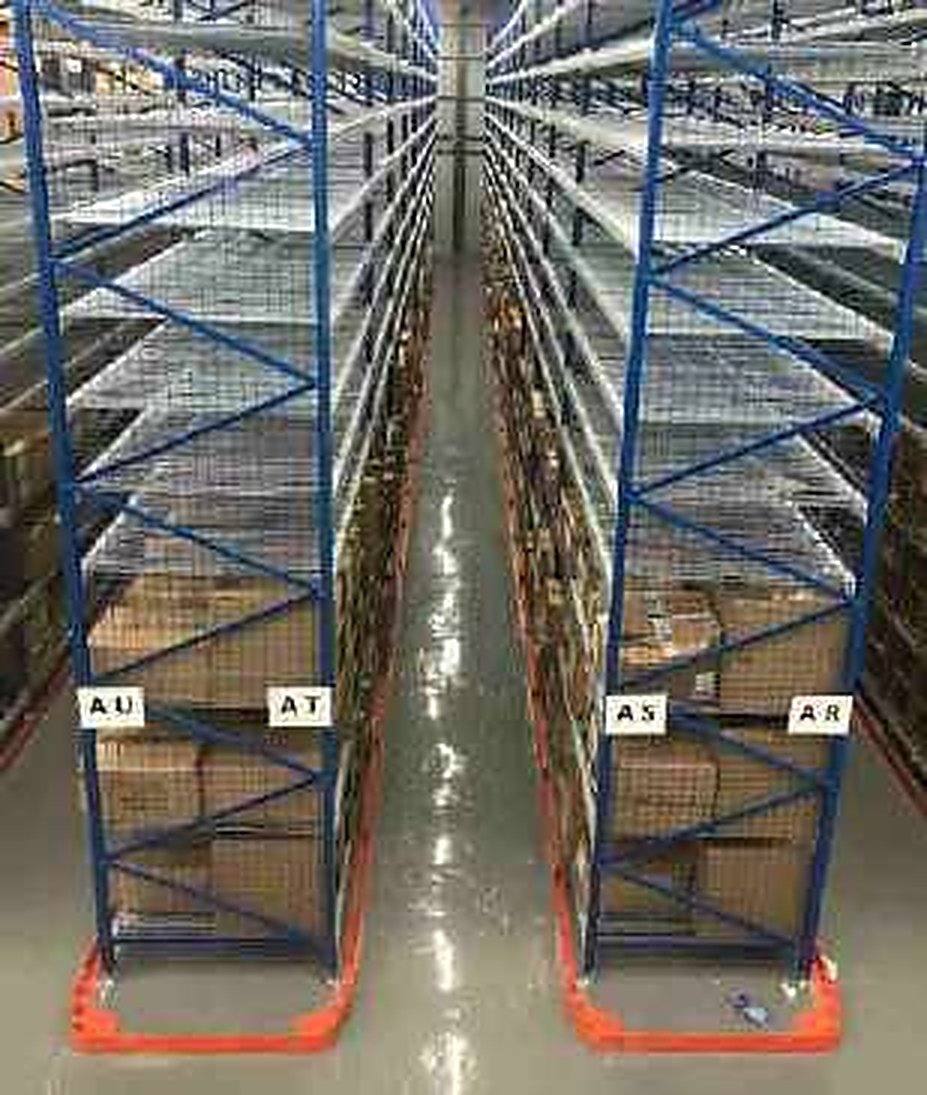
That is why JISE verifies robot racking deflection against FEM 10.2.02 / EN 15512 serviceability limits and then against the robot OEM's tighter interface requirements where they apply — and why we publish no generic load tables: the deflection-safe beam for your robot depends on your tote weight, your span and your robot's tolerance window, all three.
Hole pitch is the other quiet specification. A 50 mm pitch pattern lets shelf levels match tote heights in fine increments — recovering vertical density across thousands of locations — but only if the pitch is positionally true over the full upright length. Our roll-forming and punching lines hold the pattern to the interface drawing, and first-article inspection locks it before mass production. The integrator tolerance guide goes deeper →
Compatible with your robot platform.
We manufacture to interface drawings under NDA — across every major AMR architecture, without locking you to a robot brand.
Climbing tote robots (CTU)
The rack doubles as the robot's guideway: shelf edges serve as pick surfaces and uprights as climbing references, verified against the robot OEM's gripper envelope and verticality budget.
Floor-running lift robots (RS / STU)
Aisle-facing geometry — plumb, level heights, tote overhang clearance — held to the robot's reach envelope, aisle after aisle, for the fleet's whole service life.
Latent-lift pod AMRs
Lightweight pod frames with base-plate geometry matched to docking tolerance — minimum self-weight for battery and payload, rigid enough for years of lift cycles.
Pallet AGVs
Pallet racking detailed for driverless handling: positional tolerances, floor interfaces, guidance clearances and rack protection specified for AGV pallet movement.
Working with a specific robot brand? Send the interface drawing — our engineers confirm manufacturability and tolerance stack-up at drawing level, under NDA.
Cooperation models.
Built for integrators, robot OEMs and racking distributors who need a manufacturing partner — not another competitor.
White-label OEM
Manufactured under your brand, to your drawings, with NDA-protected interface data. Your client sees your system; we supply the steel behind it.
Direct project supply
We quote, manufacture and install for your end client with our own overseas crews — you keep the robot and software scope.
Frame-only supply
Precision structures delivered ex-works or FOB for your local installation teams, with full engineering documentation.
Related deliveries.
890,000+ tote locations
Robot-compatible tote racking (goods-to-person) — Manufacture + installation by JISE teams.
Read case →
220,000+ tote locations
Robot-compatible tote racking (goods-to-person) — Manufacture + installation.
Read case →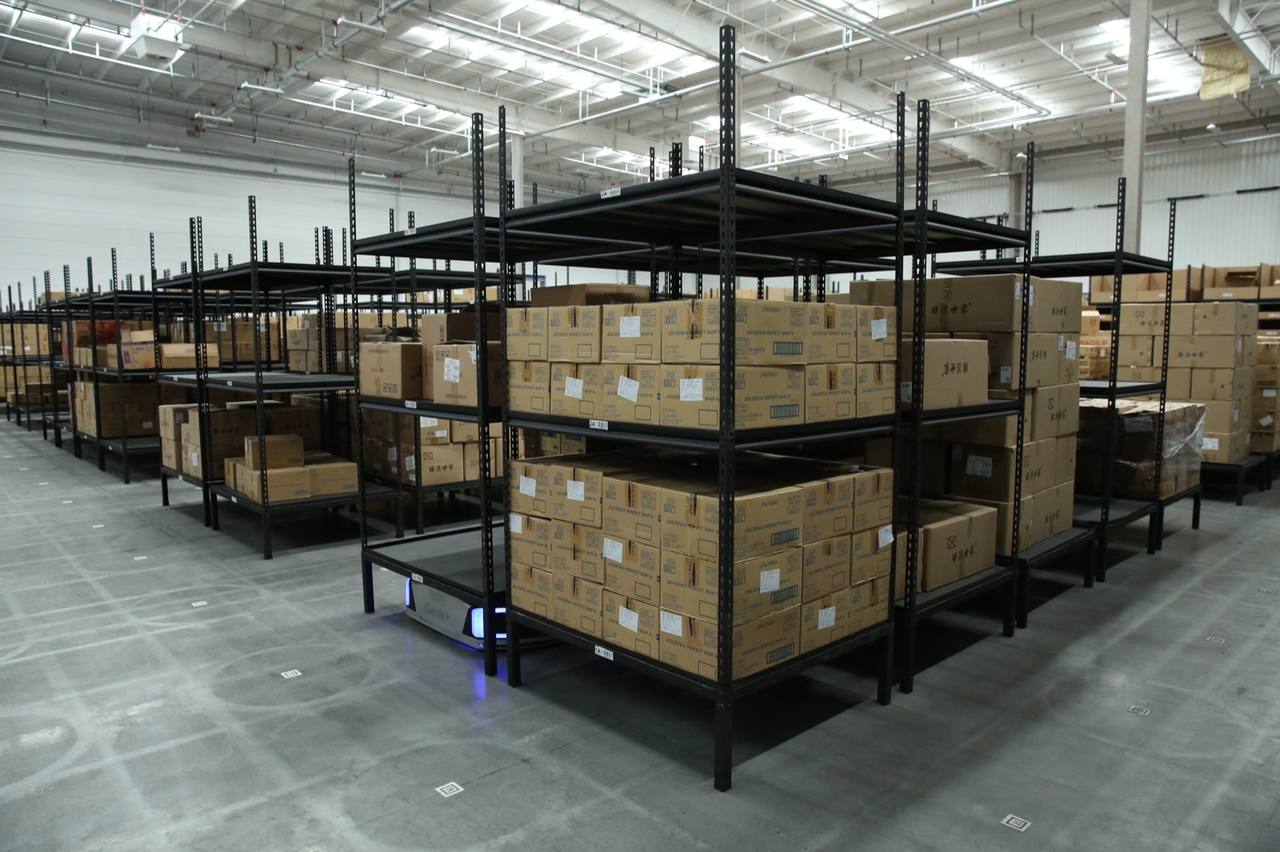
140,000+ tote locations
Robot-compatible tote racking (goods-to-person) — Manufacture + installation.
Read case →Put 40,000 tons of capacity behind your next rollout.
Send your interface drawings or target project scope — engineering reply within 48 hours.