AS 4084 vs EN 15512 vs RMI MH16.1 — Which Racking Standard Governs Your Project?
By Dan Sun, Marketing Director · Technically reviewed by Yongfeng Jiao, Structural Engineer · JISE Intelligent Storage
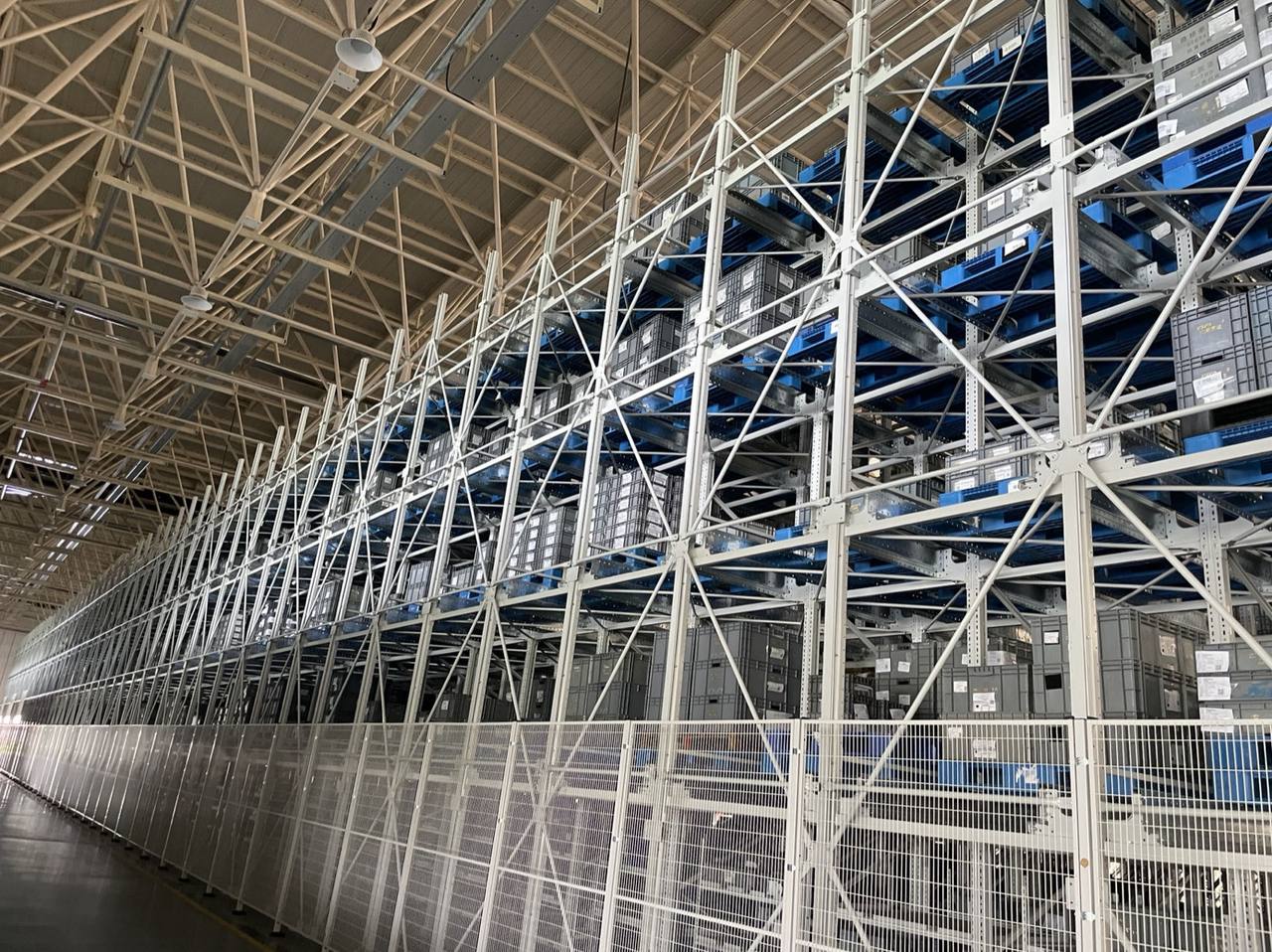
Three codes, one physics
Steel storage racking is governed by three major design regimes worldwide: AS 4084 in Australia and New Zealand, EN 15512 (with its FEM predecessor documents) across Europe and most of Asia, Africa and the Middle East, and ANSI/RMI MH16.1 in North America. All three solve the same problem — cold-formed, thin-walled steel structures carrying heavy unit loads at height — but they differ in design philosophy, required test evidence and what happens after installation.
The practical rule: the destination market chooses the code, not the supplier. A credible manufacturer designs the same rack differently depending on where it will stand — and can show the evidence file for the regime you need.
Side-by-side comparison
Details vary by edition and project specification — this table is an orientation map, not a design document. Your supplier's engineering file must cite the exact edition and the project-specific inputs.
| Dimension | AS 4084:2023 (AU/NZ) | EN 15512 / FEM 10.2.02 (EU, ME, Asia) | ANSI/RMI MH16.1 (US) |
|---|---|---|---|
| Design philosophy | Limit states design, aligned with AS/NZS 1170 loading | Limit states design on Eurocode basis (EN 1993 family) | ASD and LRFD, built on the AISI S100 cold-formed steel specification |
| Testing basis | Component tests required; capacities verified by test plus calculation | Explicit test-plus-calculation principle — beam, connector and upright tests defined in the standard | Component testing per RMI procedures; manufacturer certification via the R-Mark program |
| Operational obligations | AS 4084.2: inspections at least every 12 months by an external competent person, load signage, damage records for life of system | EN 15635 (use & maintenance): regular expert inspections, typically annual; damage classification system | Regular inspection expected; frequency set by owner practice and insurer requirements |
| Certification culture | Independent engineer sign-off (CPEng/RPEQ) is the norm; registration publicly verifiable | Consultant-reviewed calculations common on large projects; CE-marked product documentation | R-Mark certification and special inspections on high-seismic projects |
| Seismic treatment | Site seismic inputs per Australian loading code | Project-level seismic annexes where applicable | Explicit seismic design categories; among the strictest seismic provisions of the three |
What stays the same across all three
Under any of the three regimes, a defensible racking purchase rests on the same evidence chain: component test reports for the exact profiles quoted, project-specific calculations stating the code basis and edition, capacity tables matched to your configuration, and load signage plus as-built documentation at handover.
If a supplier offers one generic load table for every market, that is the tell: real capacity numbers are configuration-specific and code-specific. The table changes between AS 4084, EN 15512 and RMI because the safety format behind it changes.
Which one do you need?
- Australia / New Zealand: AS 4084.1 (design) and AS 4084.2 (operation) — non-negotiable with insurers and auditors.
- Europe, UK, Middle East, most of Asia and Africa: EN 15512, with FEM 10.2.02 still widely referenced in specifications; shuttle systems add FEM 10.2.19.
- United States / Canada: ANSI/RMI MH16.1, with seismic design per local building code; R-Mark certification increasingly requested by buyers.
- Latin America and other markets without a national racking code: the integrator, insurer or consultant typically names one of the three — put that choice in the RFQ.
AS 4084:2023 explainer — the Australian evidence chain →EN 15512 explainer — how capacities are actually determined →
How JISE works across all three regimes
JISE manufactures racking verified against the code your market enforces: AS 4084:2023 with an independent Certificate of Compliance and the published 24111305 test series for Australian projects — from radio shuttle racking to high-bay structures; FEM 10.2.02 / EN 15512 as the design basis for Europe, the Middle East and Asia; and RMI/ANSI MH16.1 component test reports for US-specified projects. Project-specific calculations and stamped FEA reports are issued in the official language of the project location.
One factory, three evidence regimes — the verification layer is standard scope on every automated project, not an extra.
See the published test reports and certificates →FEM 10.2.19 — the shuttle racking design code →
Frequently asked questions
Can one racking design satisfy AS 4084, EN 15512 and RMI at once?
Not with a single capacity table. The three codes use different safety formats and test conventions, so verified capacities differ between regimes. A serious manufacturer re-verifies the same physical rack under the destination market's code and issues the corresponding evidence file.
Does EN 15512 replace FEM 10.2.02?
In Europe, EN 15512 is the current adopted standard, while FEM 10.2.02 remains widely referenced in specifications and contracts across the Middle East and Asia. In practice a supplier must be fluent in both — and in FEM 10.2.19 for shuttle-served racking.
Which standard applies if my country has no racking code?
The project specification decides — usually named by the integrator, insurer or engineering consultant. Latin American, Southeast Asian and African projects typically adopt EN 15512/FEM or RMI. State the chosen code in your RFQ so every supplier quotes to the same basis.
What evidence should I demand regardless of the standard?
Component test reports for the exact profiles quoted, project-specific calculations citing the code edition, configuration-matched capacity tables, and handover documentation (as-builts, load signage). JISE publishes its AS 4084, FEM/EN and RMI evidence on the Quality page for comparison.
See it in practice: JISE certifications & published test reports — AS 4084, FEM, RMI, CE →
More from the standards library.
Get a project quotation within 48 hours.
Send us your warehouse dimensions, pallet spec and target location count — our engineers reply with a layout proposal and budgetary price.