BUYER GUIDE · 2026-10-22 · BY DAN SUN, MARKETING DIRECTOR · REVIEWED BY YONGFENG JIAO, STRUCTURAL ENGINEER
The Warehouse Racking Importer's Guide: Compliance, QC and Landed Cost When Sourcing from China
Who this guide is for
You are a racking distributor adding a supply line, a 3PL fitting out your own warehouses, or a project contractor sourcing steel racking from China for the first time. The product is heavy, standardized and apparently simple — which is exactly why importer mistakes are expensive: everything is fine until the containers arrive, the coating fails a site check, or the design code turns out not to match the destination market.
This guide condenses what experienced warehouse racking importers verify, in the order they verify it. For destination-specific duty and certification detail, see our country guides for Australia, Mexico and the Middle East, and the general import process overview.
Step 1 — Compliance first: the design code follows the destination
Steel racking is a structural product, and the design code is set by where it will stand, not where it is made. Australia and New Zealand require AS 4084 (2023 edition, design and operation split). Europe and most of the Middle East work to EN 15512 with FEM codes; North America specifies RMI ANSI MH16.1. Seismic zones add EN 16681 or equivalent seismic design on top. Shuttle and automated systems have dedicated codes such as FEM 10.2.19 and FEM 9.832 for the machine interface.
Ask the factory a direct question: which code will the calculation note be stamped against, and can they show a completed project file under that code? A supplier quoting 'international standard' without naming one has not answered.
Note for the US market: Chinese-origin steel racking faces trade-remedy duties. Experienced importers quote landed cost transparently before committing — or structure projects around it. Our comparison of AS 4084 vs EN 15512 vs RMI covers what each code family demands.
Step 2 — Verify the factory, not the brochure
Every racking factory's brochure shows the same four photos. What separates suppliers is verifiable evidence: mill certificates for steel coil traceability, third-party component test reports (upright and beam bending tests under the destination code), coating specifications in writing (powder-coat thickness, galvanizing grade), and — for structural welding — an execution certificate such as EN 1090.
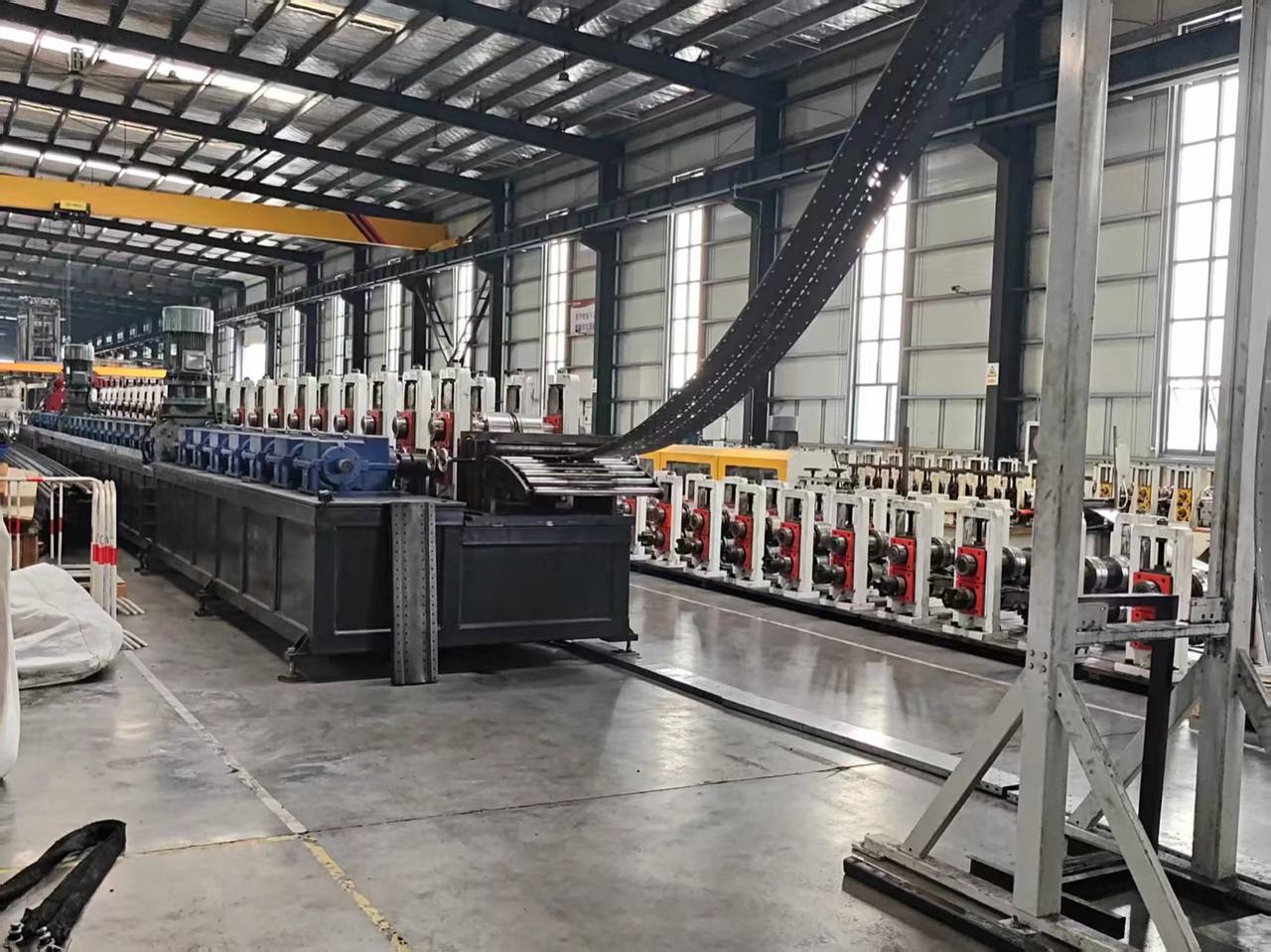
A video call walk-through of the roll-forming line and coating line costs you an hour and filters out most traders posing as factories. If the project is large, commission a third-party factory audit; if it is automated, insist on the tolerance evidence discussed in Step 1. JISE publishes its certificates and test report series openly on the Quality page — use it as a benchmark for what 'verifiable' looks like.
Step 3 — Pre-shipment QC: the checklist that saves the project
Racking defects found on site cost ten times what they cost at the factory gate. The standard pre-shipment inspection for racking covers: member dimensions and hole pitch (a 50 mm pitch system must actually be 50 mm), straightness of uprights and beams, weld quality on frames and base plates, coating thickness and adhesion spot checks, and — critically — packaging: bundle counts, edge protection, and labelling that survives eight weeks of sea freight.
Either attend loading yourself, send an inspector, or require a full photo/video record of the loading plan. Container utilization is money: a well-engineered packing plan fits significantly more tonnage into a 40HQ, and mixed containers with racking accessories — steel pallets, mesh cages, protection — amortize freight across more sellable product.
Step 4 — Landed-cost math, done before the deposit
Compare quotations on landed cost, never on FOB price. The stack: FOB + ocean freight + insurance + destination duties/tariffs + port and customs handling + inland delivery. Duty treatment differs sharply by market — Australia under ChAFTA, Mexico with its own tariff schedule, GCC states at generally low duty, the US with trade-remedy layers — so the same rack can land at very different totals in different ports.
Payment terms for racking are typically 30% deposit / 70% against bill of lading copy. Anything more front-loaded shifts risk onto you; anything less usually means the factory is financing you and pricing it in. Lead times run 3–6 weeks production plus freight — plan installation crews around the vessel, not the other way round.
Working with JISE as an importer
JISE manufactures 40,000 tons of storage equipment annually across three bases (Dongtai, Zhenjiang, Vietnam), with roll-forming and powder-coating in-house — the two processes that decide racking quality. Importers receive mill certificates, code-specific test reports, engineered container loading plans, and installation supervision for automated projects.
For distributors, we also manufacture under OEM/white-label arrangements — your brand, our steel. Send your target product mix and destination port through the RFQ form; engineering replies within 8 working hours.
Frequently asked questions
What is the typical MOQ for importing racking from China?
Most factories quote per 20ft/40HQ container of steel (roughly 20–26 tons payload). Project racking is manufactured to order, so the practical minimum is one container; below that, unit freight cost usually kills the economics.
Which HS code does steel pallet racking use?
Steel racking is commonly classified under HS 7308.90 (structures and parts of structures, of iron or steel), though some jurisdictions classify complete racking systems differently. Confirm the classification and duty rate with your customs broker at the destination port before ordering — it drives the landed-cost calculation.
How do I check quality without flying to the factory?
Three layers: documentary evidence (mill certificates, third-party test reports, coating specs), a live video audit of the production lines, and a third-party pre-shipment inspection with a defined checklist. Any factory that resists all three is telling you something.
Can JISE ship under our own brand?
Yes — white-label OEM is a standard arrangement: your branding on packaging and documentation, neutral or branded labels as you specify, with the same test reports and traceability underneath.
Get a project quotation within 48 hours.
Send us your warehouse dimensions, pallet spec and target location count — our engineers reply with a layout proposal and budgetary price.